
How to help with wisdom tooth pain?
If you are reading this with a wisdom tooth that is making one side of your jaw ache, throb or radiate pain up into your ear, then the first thing worth knowing is that this is one of the most common dental pain presentations there is, and one of the best understood. There are specific reasons wisdom teeth hurt, specific home measures that genuinely reduce the pain, and specific symptoms that mean it needs clinical attention today rather than a home remedy to hold it at bay.
How to help wisdom tooth pain depends partly on what is causing it, because not all wisdom tooth pain is the same. The pain of a wisdom tooth pushing through the gum is different from the pain of an infected flap of tissue over a partially erupted tooth, which is different again from the pain of a wisdom tooth that has developed decay in a position too inaccessible to clean effectively. Understanding which situation you are in determines both the home management and the urgency.
At Hakimi Dental Clinic in Oldbury, Birmingham, we offer emergency dental appointments from just £25, seven days a week. In the meantime, here is everything worth knowing.
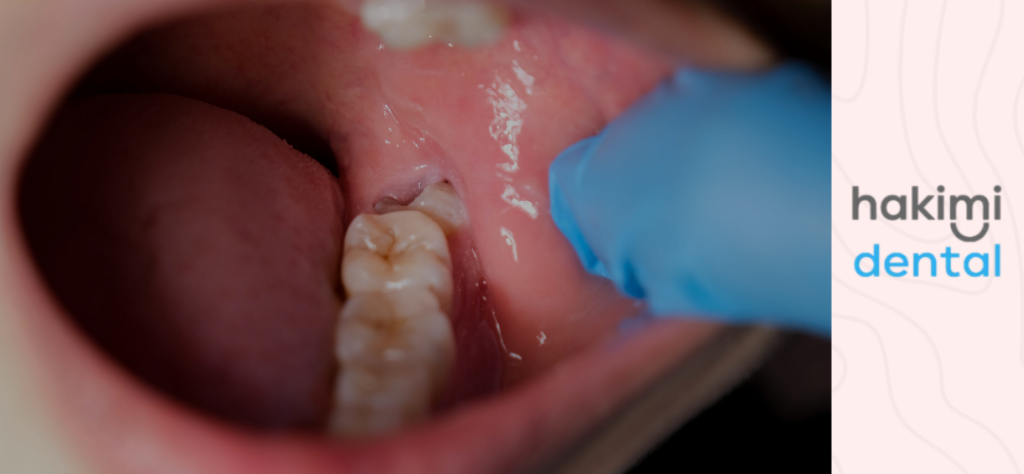
Why wisdom teeth cause pain in the first place
Wisdom teeth (third molars) are the last teeth to erupt, typically between the ages of 17 and 25. By the time they arrive, the rest of the dentition is established and there is often very little space for them.
The pain they produce comes from several distinct clinical sources:
- Eruption pressure: As a tooth pushes through bone and gum tissue, it creates physical pressure on the surrounding structures. This is a dull, persistent pressure-ache rather than a sharp pain, and it is felt in the jaw and sometimes radiates along the lower jaw, into the ear or up into the temple.
- Pericoronitis: This is the most common cause of significant wisdom tooth pain and the one most likely to bring a patient to an emergency appointment. When a wisdom tooth partially erupts, a flap of gum tissue (the operculum) covers part of the biting surface. The space beneath this flap traps food debris and bacteria in a warm, moist environment that is impossible to clean. The bacteria produce an acute local infection causing swelling, pain, bad taste, and sometimes limited mouth opening and facial swelling.
- Impaction: Wisdom teeth that cannot erupt into a normal position because of inadequate space become impacted: they are blocked by adjacent teeth or bone. Impacted wisdom teeth can cause pain from pressure against the adjacent second molar, from cyst formation around the impacted tooth, or from decay developing on the second molar where the impacted wisdom tooth is pressing against it.
- Decay: Wisdom teeth, even when fully erupted, are often so far back in the mouth that adequate brushing is very difficult. Decay develops on the tooth itself or on the adjacent second molar where the two teeth touch, and can progress rapidly in a location that is hard to assess even clinically.
- Referred pain: The inferior alveolar nerve, which supplies sensation to the lower teeth, runs through the jaw in close proximity to wisdom tooth roots. Pain from a lower wisdom tooth frequently radiates along the jaw, up into the ear, into the temple and occasionally into the neck. This is the reason wisdom tooth pain can feel like earache or a tension headache: the nerve pathway explains the distribution.
What actually helps at home
Ibuprofen: the most effective over-the-counter option
For most presentations of wisdom tooth pain, ibuprofen is the most clinically effective over-the-counter option. Unlike paracetamol, ibuprofen is a non-steroidal anti-inflammatory drug (NSAID), meaning it reduces the inflammatory process that is causing the pain and swelling, not just the pain signal itself.
For adults without contraindications, 400mg taken with food every six to eight hours (not exceeding the maximum daily dose) is the standard approach. If you can take ibuprofen, this is the starting point.
Who should be cautious with ibuprofen: patients with asthma, active peptic ulcer disease, kidney impairment, those taking certain blood pressure medications, and patients who are pregnant or breastfeeding. If ibuprofen is contraindicated, paracetamol 1000mg every six hours is the alternative.
The ibuprofen and paracetamol combination
For more significant wisdom tooth pain, combining ibuprofen and paracetamol at their separate recommended doses produces a greater pain-relieving effect than either alone. This is because they work through different mechanisms: ibuprofen inhibits prostaglandin synthesis (reducing inflammation), while paracetamol acts centrally to raise the pain threshold. They do not interact negatively, and taking them in a staggered pattern, for example paracetamol at noon and 6pm, ibuprofen at 3pm and 9pm, means you have coverage throughout the day rather than gaps.
Important: do not exceed the recommended dose of either medication in the belief that more will work better. The ceiling dose is also the safe dose.
Salt water rinse
A warm salt water rinse (a teaspoon of table salt dissolved in a cup of warm water, swilled gently around the mouth for 30 to 60 seconds and spat out) is one of the simplest and most effective home measures for pericoronitis specifically.
The rinse helps flush debris from beneath the gum flap, reduces the bacterial load in the area, and the osmotic effect of the salt helps reduce local tissue oedema (swelling). It does not treat the infection, but it reduces the bacterial loading that is driving it and provides measurable short-term symptom relief.
The key is gentleness: swilling aggressively or spitting forcefully can displace the blood supply to the area and aggravate the situation. Gentle rinsing, letting the solution sit in the area for a moment before gently releasing it.
Rinse two to four times daily, and particularly after eating, to clear food debris from around the wisdom tooth area.
Clove oil
Clove oil contains eugenol, a naturally occurring phenol that acts as a topical anaesthetic and antibacterial agent. It is the same compound used in certain professional dental materials (zinc oxide eugenol-based cements and dressings). Applied in small amounts to a cotton bud and gently applied to the gum tissue around the painful wisdom tooth, it provides 20 to 40 minutes of localised numbing.
The emphasis is on small amounts: undiluted clove oil is a mild irritant to soft tissue, and excessive application can cause a chemical burn to the gum surface. A single drop on a cotton bud, applied to the area directly, is sufficient.
Cold compress
Applying an ice pack wrapped in a cloth to the outside of the cheek for 15 to 20 minutes reduces local inflammation, numbs the surface tissue through cold, and can reduce oedema. This is most useful in the early stages of an acute infection where swelling is developing.
Cold on the outside of the face. Never heat: applying heat to an infected or inflamed area increases blood flow and typically worsens swelling and pain.
What not to do
Aspirin directly on the gum: A common home remedy that causes a chemical burn to the mucosal tissue (aspirin burn). The aspirin needs to be swallowed and absorbed systemically to produce any analgesic effect. Placing it directly against the gum does not help and actively damages the tissue.
Vigorous rinsing or spitting: This disturbs the gum tissue and the blood supply to the area, aggravating inflammation.
Assuming severe symptoms will pass: The scenario most important to understand is that symptoms which are improving on home management and a deteriorating situation can initially look the same. Pain that is not clearly and consistently improving over 24 to 48 hours, or that is accompanied by any of the warning signs below, needs clinical attention regardless of what home measures have been tried.
The symptoms that mean it needs professional attention today
How to help wisdom tooth pain at home has limits. The following symptoms mean those limits have been reached and professional assessment is needed urgently:
Swelling that is spreading: Localised swelling on the gum around the wisdom tooth is common with pericoronitis. Swelling that has extended to the cheek, the jaw or toward the neck is spreading infection. Spreading dental infection can, in rare but documented cases, track into the spaces of the neck and compromise the airway. This is a medical emergency.
Difficulty opening the mouth (trismus): Severe pericoronitis causes spasm of the muscles of mastication, particularly the masseter and medial pterygoid, limiting mouth opening. This is a sign of significant local infection requiring professional treatment.
Difficulty swallowing: Any dental infection that produces difficulty or pain on swallowing needs emergency assessment.
Fever: Temperature above 38°C alongside dental pain indicates the infection has a systemic component and requires professional treatment with antibiotics and appropriate drainage.
Pain that is not controlled by maximum doses of ibuprofen and paracetamol combined: If the combination approach is not keeping the pain manageable, the situation has moved beyond what home management can address.
A bad taste that has developed alongside the pain: Often indicating that the infection beneath the operculum has begun to drain, which is temporary relief but not resolution.
At Hakimi Dental Clinic in Oldbury, emergency appointments are available from just £25 for exactly these situations. The assessment determines what is driving the pain and what clinical treatment is appropriate, and provides the professional relief that home measures cannot.
What professional treatment for wisdom tooth pain involves
The clinical management of wisdom tooth pain depends on the diagnosis and the severity of the presentation.
Irrigation and debridement of the operculum
For pericoronitis, the most immediate clinical intervention is irrigation: using a dental syringe to flush warm saline or chlorhexidine solution beneath the gum flap, clearing the debris and bacteria that have accumulated. This is straightforward, takes a few minutes, and provides rapid relief of the acute symptoms in most cases.
In some presentations, the operculum itself may be surgically removed (operculectomy), eliminating the flap of tissue that creates the problem space. This is appropriate where the wisdom tooth is expected to fully erupt and the removal of the tissue would allow that eruption to proceed normally.
Antibiotics
Where infection has spread beyond the immediate area, causing swelling beyond the local site, limited mouth opening, fever or systemic symptoms, antibiotics are prescribed alongside the local treatment. Metronidazole and amoxicillin are most commonly used for acute pericoronitis in the UK. Antibiotics treat the spread of infection but do not eliminate the source: they are used alongside local treatment, not instead of it.
Wisdom tooth extraction
Where the wisdom tooth is causing recurrent pericoronitis (two or more acute episodes), is impacted with no prospect of erupting into a useful position, is causing decay on itself or the adjacent second molar, or is the source of a cyst or other pathology, extraction is the definitive treatment. Removing the tooth removes the source of the problem permanently.
The extraction itself is carried out under local anaesthetic, either at the practice for straightforward cases or at a specialist oral surgery unit for complex impacted teeth. The procedure involves surgically accessing the tooth, removing it in one piece or in sections if it is impacted, and closing the site. Recovery takes two to seven days for most patients.
After acute symptoms resolve: the role of check-ups and hygiene
A wisdom tooth that has caused one episode of acute pain has an elevated likelihood of causing another. Once the acute episode is resolved, the appropriate next step is an assessment to establish the longer-term plan.
A dental check-up with X-rays assesses the position and eruption pathway of the wisdom tooth, the condition of the adjacent second molar, and whether extraction or watchful monitoring is the appropriate recommendation. This is a clinical decision that depends on the specific anatomy: some wisdom teeth can be retained successfully for years if they are accessible and can be kept clean; others have a position or anatomy that makes repeated problems almost inevitable.
For wisdom teeth that are being retained, dental hygienist appointments are particularly important. The area around a partially erupted or fully erupted wisdom tooth accumulates calculus (hardened plaque) rapidly and in a location that is difficult to reach with a toothbrush. Professional cleaning at regular intervals reduces the bacterial load in this area and significantly reduces the risk of pericoronitis reoccurrence.
The bottom line
How to help wisdom tooth pain depends on what is causing it. For eruption pressure and mild to moderate pericoronitis, ibuprofen and paracetamol combined, warm salt water rinses and clove oil applied to the gum provide meaningful relief. For more significant pericoronitis, swelling, fever or pain that is not controlled by medication, professional assessment and treatment is the only appropriate response.
The home measures work. They work better when the underlying situation is contained. When it is not, they provide only partial and temporary coverage over a problem that is progressing.
At Hakimi Dental Clinic in Oldbury, Birmingham, emergency appointments are available from just £25, and our team at 51a New Birmingham Road, B69 2JF is here to assess wisdom tooth pain properly, provide immediate relief, and set out the options for what happens next. A dental check-up once the acute episode settles is the step that prevents the next one.
Disclaimer
The information in this article is intended for general educational guidance only and does not constitute personalised dental advice. If you are experiencing severe wisdom tooth pain, swelling or difficulty swallowing, please seek professional dental care promptly rather than relying solely on home management.
Hakimi Dental Clinic is a dental practice at 51a New Birmingham Road, Oldbury, B69 2JF. We offer dental check-ups from £35, emergency dental appointments from £25, dental hygiene appointments, dental implants, Invisalign, composite bonding, porcelain veneers, teeth whitening, dental crowns and smile makeovers.
FAQs
It depends on what is causing it. Simple eruption discomfort, without infection, typically lasts a few days as the tooth moves through the gum tissue, then eases. Pericoronitis, without treatment, does not reliably resolve on its own: it may ease temporarily when debris drains but tends to recur. An impacted wisdom tooth causing persistent pressure pain may not improve without intervention. Any wisdom tooth pain that is not clearly improving after 48 to 72 hours of home management, or that is accompanied by the warning symptoms described in this article, warrants a dental assessment.
Sometimes mild eruption pain resolves as the tooth moves through the final stages of emergence into the mouth. Pericoronitis, the infected gum flap, does not reliably resolve without treatment: the anatomy that causes it (a partially exposed tooth with a gum flap creating a trap for bacteria) does not change on its own. A wisdom tooth that has produced one painful episode will produce further episodes unless the situation is resolved either by the tooth fully erupting, the flap being removed, or the tooth being extracted.
Extraction is the definitive solution when a wisdom tooth is causing recurrent pericoronitis (two or more acute episodes in a year is a common clinical threshold), is impacted against the adjacent tooth, is causing decay on itself or the adjacent second molar, or has no prospect of erupting into a useful functional position. The decision is made at a dental check-up with X-rays showing the tooth’s position, root anatomy and relationship to the adjacent teeth and the inferior alveolar nerve. Not every painful wisdom tooth needs to come out, but recurrent or persistent pain usually indicates it does.
Yes, specifically for pericoronitis. The salt water rinse helps flush debris from beneath the gum flap, reduces the local bacterial load, and has a mild osmotic effect that reduces tissue oedema. It does not treat the underlying infection, but it reduces the conditions that allow the infection to persist and provides genuine symptom relief. It also causes no harm, has no side effects and costs nothing, which makes it worth doing regardless of what other measures are being used.
Yes, and the explanation is the anatomy of the inferior alveolar nerve. This nerve, which supplies sensation to the lower teeth, runs through the jaw canal very close to the roots of lower wisdom teeth. Pain originating at a lower wisdom tooth radiates along this nerve pathway, which is why patients describe the pain as reaching their jaw, ear, temple and sometimes neck. This is referred pain along the nerve, not a sign that the infection has physically spread to those areas. However, physical swelling extending to the jaw or neck, as distinct from pain felt there, is a different and more urgent finding that needs same-day assessment at our emergency dental service.