
How long does teeth whitening last?
You’ve had your teeth whitened, and the result is exactly what you hoped for. The obvious next question is how long does teeth whitening last before it starts to fade. The honest answer depends on the method used and your own habits afterwards. This guide covers what to realistically expect. It also explains what speeds up fading, and how to get the most out of your results.
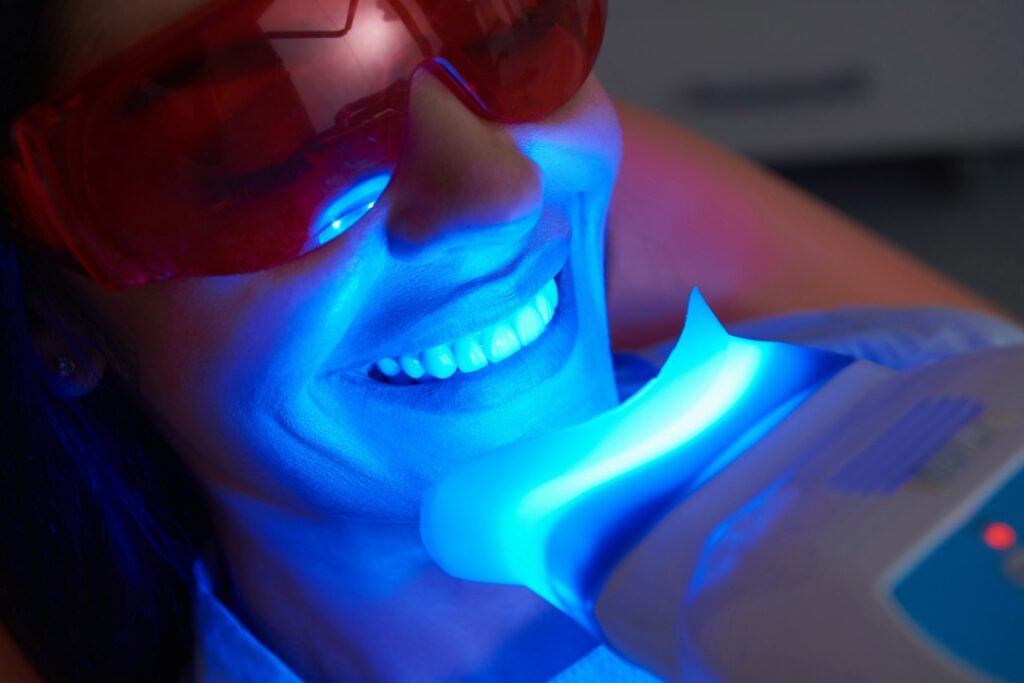
How long does teeth whitening last on average
For professional whitening, most patients see results lasting between six months and three years. Where you land in that range depends heavily on your diet, oral hygiene, and whether you smoke. It’s a wide range, which is exactly why it’s worth understanding what actually moves the needle for your own results.
At-home products, whitening toothpaste, and over-the-counter strips generally last a shorter time. Results from these tend to fade within a few months. The whitening agents used are simply weaker than what’s used in professional treatment.
It’s worth being clear that whitening doesn’t wear off in one sudden step. It fades gradually, so most people top it up before it’s noticeably reverted, rather than waiting until it’s completely gone.
Why the results vary so much between people
A few factors genuinely explain why one person’s whitening lasts three years and another’s fades within six months.
What you eat and drink. Coffee, tea, red wine, and dark sauces are the biggest culprits. The more of these in your regular diet, the faster new staining builds up on top of the whitened surface.
Smoking. Tobacco stains teeth quickly. It noticeably shortens how long whitening results last, often bringing that three-year estimate down to under a year.
Oral hygiene. Good brushing and flossing slow down new staining considerably. Poor hygiene lets plaque and staining build up faster, which makes whitening appear to fade sooner than it actually has.
The whitening method used. Professional treatments use stronger whitening agents that penetrate deeper into the tooth. This is a big part of why they last significantly longer than at-home alternatives.
Your natural tooth colour and enamel. Some people’s teeth simply respond better to whitening and hold the result longer. This is largely down to natural enamel thickness and porosity.
How long does professional teeth whitening last compared to other methods
This is where the difference really shows.
Professional in-practice whitening typically lasts one to three years. It uses a higher concentration of whitening agent under controlled conditions. This gives both a stronger initial result and better staying power.
Take-home professional kits use custom trays and professional-grade gel. These generally last similarly to in-practice treatment, often twelve months to two years. They also have the advantage of being easy to top up at home.
Whitening strips tend to last a few months, sometimes stretching towards six with consistent use and good habits. How long do whitening strips last really depends on the concentration used, and how well you look after your teeth afterwards.
Whitening toothpaste offers the shortest-lasting results, typically weeks rather than months. It only removes surface staining rather than lightening the tooth itself.
Does teeth whitening last forever
No, and it’s worth setting that expectation from the start. Whitening changes the shade of your teeth, but it doesn’t stop new staining from building up over time. Even the longest-lasting professional treatments need refreshing eventually. Daily life, food, drink, and simply ageing all continue to affect tooth colour.
This isn’t a flaw in the treatment. It’s just how the process works. Knowing it upfront helps you plan a realistic touch-up schedule, rather than being caught off guard.
Why the fading catches people off guard
Whitening doesn’t announce itself when it starts to fade. There’s no specific moment where it noticeably drops off. Instead, it happens gradually, day by day, which means most people only notice once they compare a photo from a few months ago with how their teeth look now. This is exactly why setting a rough touch-up timeline in advance is more useful than waiting to notice a change.
How to make your results last longer
A handful of habits make a genuine difference to how long teeth whitening lasts.
Rinse or brush after staining foods and drinks. You don’t need to give up coffee or wine entirely. A quick rinse with water afterwards reduces how much pigment settles on the surface.
Use a straw for cold drinks. This keeps staining liquids away from the front teeth, where discolouration is most visible.
Keep up with your hygiene routine. Regular brushing, flossing, and hygienist visits all slow down new staining, which helps your whitened shade last noticeably longer. You can find out more about what’s involved on our dental hygiene page.
Avoid smoking, or cut back where you can. This is one of the single biggest factors in how quickly whitening fades.
Consider a teeth whitening touch-up. A brief top-up treatment, rather than starting from scratch, keeps your shade consistent without needing the full original process again.
When it’s time for a touch-up
A few signs suggest it’s worth booking a refresh rather than waiting:
- Your teeth look noticeably duller than they did right after treatment
- You can see new surface staining building up, particularly along the gumline
- It’s been over a year since your last professional whitening
- You’re smoking or drinking a lot of coffee or tea and haven’t refreshed the result in a while
Regular check-ups are also a good natural point to ask about this. We can see how your whitening has held up and advise honestly on whether a touch-up makes sense yet.
What we recommend at Hakimi Dental Clinic
We always set realistic expectations from the start. A treatment that under-delivers on longevity is more disappointing than one where you know what to expect. Our approach uses professional-grade whitening designed to give a strong initial result, as well as one that holds up well with reasonable care. You can find out more about the treatment itself on our teeth whitening page.
If you’re also considering composite bonding alongside whitening, timing matters. Bonding material can’t be whitened once it’s placed. We always recommend whitening first, then matching any bonding work to your new, brighter shade.
At Hakimi Dental Clinic, we see a lot of patients who whitened years ago elsewhere and are surprised by how quickly it faded. Often, it comes down to the strength of treatment used originally. Sometimes it’s simply not knowing that a touch-up is a normal, expected part of keeping results looking good.
Frequently asked questions
How long does teeth whitening last on average? Professional whitening typically lasts between six months and three years, depending on your diet, oral hygiene, and whether you smoke. At-home products generally last a shorter time, often just a few months.
How long does professional teeth whitening last compared to strips? Professional whitening usually lasts one to three years, while whitening strips tend to fade within a few months. The difference comes down to the strength of the whitening agent used and how it’s applied.
Does teeth whitening last forever once it’s done? No. Whitening changes your tooth shade, but new staining continues to build up over time from food, drink, and other daily habits. Even long-lasting professional results need refreshing eventually.
What’s the best way to make teeth whitening last longer? Rinsing after staining foods and drinks helps, as does using a straw for cold drinks and keeping up with your hygiene routine. Avoiding smoking makes a real difference too. Booking a touch-up before results fade noticeably also keeps your shade consistent.
How often should I get a teeth whitening touch-up? This depends on your habits, but many patients find a touch-up every twelve to eighteen months keeps results looking fresh. Heavier coffee, tea, or wine drinkers, or smokers, may need to top up sooner.
If your whitening has faded, or you’re considering treatment for the first time, get in touch. We’ll talk you through what result you can realistically expect and how to keep it looking its best.
Medically reviewed by Dr Adeel Mughal, Associate Dentist at Hakimi Dental Clinic, GDC number 278659.