
Sensitive Front Teeth
Why they hurt, what is causing it, and how to actually fix the problem
Cold air hits your face on the way to the car. You take a sip of cold water. You bite into something cold. And your front teeth react — a sharp, short flash of pain or sensitivity that is completely disproportionate to what just happened.
If this sounds familiar, you are not alone. Sensitive front teeth are one of the most commonly reported dental complaints, and unlike sensitivity in the back teeth — which tends to be focused and tied to a specific tooth with a specific problem — front tooth sensitivity can be more diffuse, more persistent, and more closely tied to the way the teeth are being used and cared for day to day.
The good news: in the majority of cases, the cause of sensitive front teeth is identifiable and treatable. Understanding which cause applies to you is the starting point for doing something effective about it — because sensitivity toothpaste, which most people try first, is genuinely helpful for some causes and completely insufficient for others.
At Hakimi Dental Clinic in Oldbury, Birmingham, we offer dental check-ups from just £35 and emergency appointments from £25 — because whether sensitivity is gradual and chronic or has suddenly become acute, knowing what is behind it changes everything about how you manage it. This guide covers all of it.
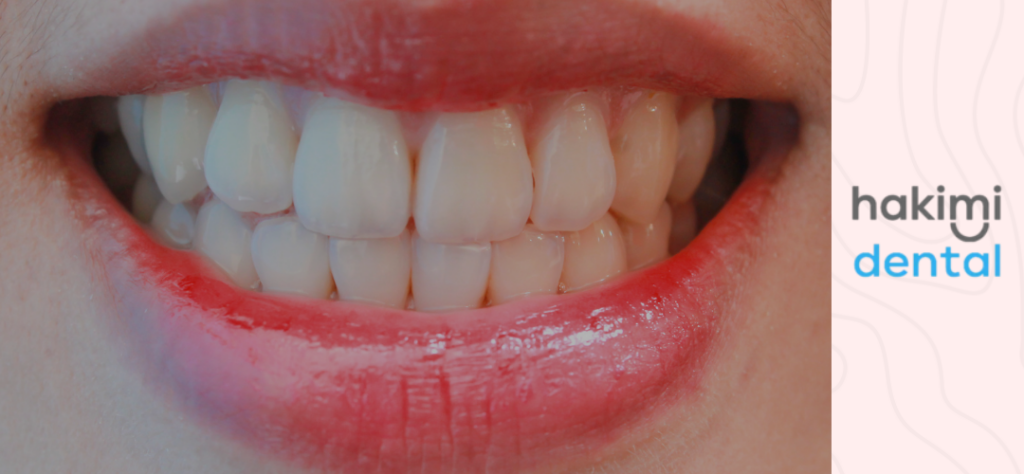
Why front teeth are more sensitive than back teeth
Before getting into causes, it helps to understand the anatomy that makes front teeth particularly susceptible to sensitivity.
Front teeth — the incisors and canines — have thinner enamel than back teeth. The upper front teeth in particular have relatively thin enamel at the incisal edges (the biting edges), and the enamel thins further as it approaches the gum line. When enamel thins, the dentine beneath it becomes closer to the outer surface, and it is through dentine that most sensitivity is transmitted.
Dentine is filled with thousands of microscopic tubules — tiny channels that run from the outer dentine surface inward toward the pulp (nerve) of the tooth. When these tubules are exposed or when the fluid inside them is disturbed by temperature changes, acidic foods or pressure, the movement stimulates the nerve at the inner end of the tubule. That stimulation is perceived as sensitivity.
Front teeth are also more directly exposed to:
- Cold air entering the mouth during breathing
- Cold and hot drinks making direct contact with the labial (lip-facing) surface
- Acidic foods and drinks that erode the enamel surface
- The physical force of biting, particularly habits like nail-biting or pen-chewing
This combination of thinner enamel, direct environmental exposure, and functional use makes sensitive front tooth complaints common even in patients with otherwise healthy mouths.
The most common causes — and why identifying the right one matters
Enamel erosion from acid
This is one of the most common and most underrecognised causes of sensitive front teeth, particularly in patients who consider themselves to be good at brushing and would not describe themselves as someone with dental problems.
Acid erosion occurs when the tooth surface is repeatedly exposed to acidic substances — dietary acids from fruit juice, fizzy drinks (including sparkling water), vinegar-based foods, citrus fruits — or gastric acid from acid reflux or frequent vomiting. Unlike decay (which is caused by bacterial acid produced from sugar), erosion does not produce cavities. It progressively dissolves the enamel surface across a broad area, making teeth shorter, thinner and more translucent at the edges.
The key distinguishing features of acid erosion:
- The incisal edges of the front teeth become thinner and more transparent
- All four upper front teeth (or more) tend to be affected, not just one
- The surfaces look smooth and glassy rather than having the normal surface texture of enamel
- Sensitivity to cold and acidic foods is widespread rather than localised
- There is often a history of frequent fruit juice, sparkling water, or reflux
Once enamel has been lost to erosion, it does not grow back. The management involves:
- Eliminating or significantly reducing the acidic exposure (dietary change, reflux treatment with a GP)
- Using a fluoride toothpaste and applying it carefully — letting it sit on the teeth rather than rinsing immediately after brushing
- Not brushing immediately after an acidic exposure, as the temporarily softened enamel is more vulnerable to abrasion
- Professional fluoride applications at the dental practice to help remineralise the remaining enamel surface
- In cases where erosion has progressed significantly, composite bonding or ceramic restorations to restore tooth length and cover exposed dentine
Gum recession exposing the root surface
Where the gum has receded — pulled back from its normal position against the tooth — the root surface of the front tooth becomes exposed. Root dentine (covered by cementum rather than enamel) is far more porous and more sensitive than the enamel above the gum line. Even a small amount of recession on a front tooth can produce significant sensitivity at the gum margin.
What causes recession on front teeth:
- Aggressive toothbrushing technique, particularly with a medium or hard brush
- Gum disease (periodontitis) causing the gum to follow the bone as the bone recedes
- Thin gum tissue genetically — some patients have a naturally thin, fragile periodontal biotype
- Orthodontic treatment that moves a tooth outside the available bone
Signs of recession-related sensitivity:
- Sensitivity focused at the neck of the tooth (the gum margin) rather than the biting edge
- A visible notch or groove at the gum line
- Teeth that appear longer than they used to
- Sensitivity that occurs when the gum area is touched or when cold water contacts the exposed root
Managing recession-related sensitivity requires addressing the cause. If brushing technique is the driver, switching to a soft brush and a gentle circular technique is essential. If gum disease is involved, professional dental hygienist treatment is the appropriate intervention — removing the bacterial deposits beneath the gum line that drive the disease.
For recession that is established and causing ongoing sensitivity, desensitising agents applied professionally can help, and in some cases a composite restoration placed over the exposed root surface provides both coverage and a reduction in sensitivity.
Toothbrush abrasion
Related to recession but a distinct mechanism: brushing too hard with a hard bristle brush does not only affect the gum. It also abrades the cervical dentine at the neck of the tooth — the area just above and below the gum margin where enamel is thinnest. Repeated abrasion creates a visible notch in this area and exposes the dentine directly.
A sensitive front tooth at the gum margin that is associated with a visible notch, with no recession of the gum itself, is most commonly explained by toothbrush abrasion. The fix is technique — switching to a soft brush, reducing pressure, using a gentle circular motion rather than horizontal scrubbing — alongside a desensitising toothpaste to help occlude the exposed tubules.
An electric toothbrush with a pressure sensor is one of the most consistently effective practical changes for patients who tend to brush too hard — the sensor prevents excessive force, which is often applied without the patient being aware of it.
Chips and cracks in front teeth
A chip to the incisal edge of a front tooth exposes the dentine beneath the enamel directly to the oral environment. If the chip is small, the exposed dentine may not be immediately visible, but the resulting sensitivity — particularly to cold air and cold drinks — makes itself known quickly.
Similarly, hairline cracks in the front teeth (craze lines) — which develop over time from grinding, biting on hard objects, or the normal stress of daily function — can produce sensitivity that appears without any visible damage to the tooth surface.
A sensitive front tooth that began after an incident — a fall, biting on something hard, a noticeably new sensitivity following a food contact — is more likely to be explained by a chip or crack. These need clinical assessment: an appropriate dental check-up will identify the structural change, and the management depends on the depth and extent.
A small chip is very commonly repaired with composite bonding — the tooth-coloured material applied directly to the tooth surface, shaped and polished in a single appointment. A crack that does not extend to the pulp may be managed by covering the tooth with a restoration that prevents further propagation; one that reaches the nerve requires root canal treatment.
Whitening-related sensitivity
Tooth whitening — whether professional custom tray whitening or over-the-counter strips — is a common trigger for sensitivity in the front teeth. The hydrogen peroxide compound penetrates the enamel and temporarily increases the reactivity of the dentinal tubules, producing sensitivity to cold during and shortly after treatment.
This type of sensitivity is:
- Temporary — it resolves within a few days of stopping or completing whitening
- Predictable — it tends to be present each time whitening gel is used and absent otherwise
- Managed by using a lower-concentration gel, shorter whitening sessions, or a desensitising gel alongside the whitening
- Not a sign of permanent damage to the teeth
If sensitivity from whitening is significant, reducing gel concentration or wearing time, using a desensitising toothpaste during the whitening period, and applying the desensitising gel in the tray rather than the whitening gel for one session between whitening sessions can all help.
Teeth grinding (bruxism) and front teeth sensitivity
Nocturnal grinding — bruxism — subjects the front teeth to significant lateral and protrusive forces that they are not designed to absorb routinely. The canines bear a particular functional load during lateral jaw movements (they are the guidance teeth in many people’s bite), and the incisors take the protrusive load.
Over time, grinding wears the incisal edges of the front teeth, progressively thinning the enamel at exactly the most sensitive part of the tooth. The resulting sensitivity tends to be:
- At the biting edges rather than the gum margins
- Present throughout the day rather than being linked to temperature or food specifically
- Associated with visible flattening or wear of the incisal edges when compared to their original profile
A night guard — a custom-fabricated appliance worn during sleep — protects the front teeth from further wear. It does not reverse the wear that has already occurred, but it prevents its progression. For significant wear on front teeth, composite bonding or ceramic restorations can restore the lost tooth structure after the bruxism is managed.
The link to diet — beyond obvious acids
Beyond overtly acidic foods, there are dietary patterns that contribute to sensitive front teeth that patients often do not immediately connect:
Frequent snacking throughout the day means the mouth spends more time in an acid environment (bacteria produce acid every time sugar is consumed, and the pH of the mouth takes approximately 30 to 40 minutes to recover after each exposure). Front teeth exposed to dozens of acid cycles per day experience cumulative enamel loss.
Holding citrus slices against the front teeth — as some people do with lemons or limes in drinks — concentrates the acid exposure directly on the front tooth surfaces.
Smoothies drunk slowly over an extended period expose the front teeth to prolonged acid contact. A smoothie drunk in five minutes is less damaging than one drunk over an hour.
What actually helps: an honest hierarchy
Things that genuinely help
Desensitising toothpaste (used correctly) Toothpastes containing potassium nitrate or stannous fluoride work by either calming the nerve fibres within the dentine tubules (potassium nitrate) or occluding the tubules themselves (stannous fluoride). They take two to four weeks of consistent daily use to produce noticeable benefit. Critically — they should not be rinsed away immediately after brushing. Spit and leave, or apply a small amount to the sensitive areas with a fingertip before bed and leave it overnight for maximum contact.
Professional fluoride application A high-concentration fluoride varnish applied by the dental hygienist or dentist during a check-up appointment is significantly more concentrated than anything available in over-the-counter products. It adheres to the tooth surface, remineralises softened enamel and partially occludes exposed dentinal tubules. For patients with erosion or recession-related sensitivity, periodic professional fluoride application makes a meaningful clinical difference.
Technique correction Switching to a soft brush, reducing brushing pressure and adopting the correct technique costs nothing and removes one of the most common causes of front tooth sensitivity progression.
Addressing the underlying cause None of the symptomatic measures above address the root cause of sensitivity if that cause is ongoing erosion, progressive gum disease, or advancing bruxism. These need clinical management — not just symptom suppression.
Things that do not help much
Sensitivity toothpaste used alone when the cause is structural. If sensitivity is from a chip, a crack, significant recession, or erosion that has already thinned the enamel substantially, a desensitising toothpaste manages symptoms but does not address the problem. The tooth still needs clinical attention.
Rinsing with mouthwash immediately after brushing. This washes away the fluoride from your toothpaste — the component that provides the most lasting protective benefit. Mouthwash, if used, should be at a different time from brushing.
Brushing harder or more frequently. Sensitivity from abrasion or erosion is made worse by additional mechanical trauma. More brushing is not better brushing.
When to treat sensitive front teeth as an emergency
Most front tooth sensitivity is chronic and can be assessed at a routine dental check-up without particular urgency. However, the following situations warrant same-day assessment:
- A sensitive front tooth that has become suddenly, severely painful — particularly if the pain is constant rather than triggered
- Sensitivity accompanied by visible swelling of the gum around the tooth
- A tooth that has become extremely sensitive following an impact or trauma
- A tooth that feels loose alongside sensitivity
- A bad taste from the gum area around a sensitive front tooth — suggesting an abscess
At Hakimi Dental Clinic in Oldbury, emergency appointments are available from just £25 for exactly these presentations. Sudden severe sensitivity in a front tooth can indicate a crack reaching the pulp, an abscess forming, or trauma-related pulpal injury — all of which need clinical assessment and appropriate treatment the same day.
The bottom line
Sensitive front teeth have multiple possible causes — acid erosion, gum recession, toothbrush abrasion, chips, cracks, whitening and grinding are all common culprits, and the right management depends on identifying which applies. Sensitivity toothpaste helps for some causes and does very little for others. The only way to know which cause is driving your sensitivity — and therefore which management will actually work — is a proper clinical assessment.
A dental check-up at Hakimi Dental Clinic starts at just £35 and gives you an accurate clinical picture of what is happening with your sensitive front tooth or teeth, what the cause is, and what treatment or behavioural change will produce lasting improvement rather than temporary symptom management.
Disclaimer
The information in this article is intended for general educational guidance only and does not constitute personalised dental or medical advice. If you have concerns about sensitive front teeth, please book an appointment with a qualified dental professional for a proper clinical assessment.
Hakimi Dental Clinic is a dental practice at 51a New Birmingham Road, Oldbury, B69 2JF. We offer dental check-ups from £35, emergency dental appointments from £25, dental hygiene appointments, dental implants, Invisalign, composite bonding, porcelain veneers, teeth whitening, dental crowns and smile makeovers.
FAQs
Cold air causes rapid temperature change at the tooth surface. In a tooth with thin enamel, exposed dentine or recession, this temperature change affects the fluid in the dentinal tubules — causing them to contract rapidly and stimulating the nerve at the inner end of the tubule. Front teeth are directly exposed to air flowing into the mouth in a way that back teeth are not, which is why they respond to cold air when the back teeth may not. If this is a new symptom or has worsened recently, a dental check-up to identify the cause is the appropriate step.
It depends on the cause. Sensitivity from exposed dentine that is caused by ongoing erosion or gum disease can be managed — but only if the underlying cause is addressed. Sensitivity from a chip or crack can be treated by restoring the tooth, which removes the exposed dentine. Recession-related sensitivity that has been halted can be managed with desensitising treatments. In cases where significant structure has been lost, composite bonding or ceramic restorations can cover exposed dentine and protect it long-term. Your dental hygienist and dentist can advise on which approach is appropriate for your specific presentation.
Yes — whitening-related sensitivity of the front teeth is very common. The hydrogen peroxide compound temporarily increases the reactivity of the dentinal tubules, producing sensitivity to cold during and shortly after whitening. This is temporary and resolves within a few days of stopping treatment. Reducing the gel concentration, shortening the wearing time, or using a desensitising gel in the tray between whitening sessions all help manage it. If sensitivity is severe, pause the whitening and discuss with your dentist before continuing.
Recession at the gum line on front teeth is a common cause of sensitive front teeth because it exposes the root surface, which is more sensitive than enamel-covered crown surfaces. The priority is identifying and addressing the cause — whether that is brushing technique, gum disease, or a thin periodontal biotype. A dental hygienist appointment assesses the gum health and recession level, provides professional cleaning where gum disease is contributing, and gives personalised guidance on technique. For established recession that is not progressing, the sensitivity is managed with desensitising toothpaste, professional fluoride application and, in some cases, a composite restoration over the exposed root.
Not always, but a single sensitive front tooth that is distinctly more sensitive than its neighbours warrants clinical attention more promptly than generalised sensitivity across multiple teeth. A single tooth that has become sensitive may have a specific cause — a crack, an early abscess, a chip, or a failing restoration — that a routine dental check-up will identify. If that sensitivity is severe, constant, spontaneous (not just triggered by temperature) or accompanied by any swelling, it needs same-day assessment — our emergency dental service in Oldbury is available from just £25.