
Dental numbing injection: what it is, how it works, and what to expect
Most people do not dread the actual dental treatment — they dread the injection that comes before it.
That needle going in is what makes patients grip the armrests, tense up, and sometimes put off appointments altogether. Yet the dental numbing injection is, in almost all cases, the thing that makes modern dentistry painless. Without it, the filling would hurt. With it, you feel nothing more than pressure.
Understanding exactly what happens when you receive a dental numbing injection — how it works, what sensations you will feel, how long it lasts, and why some teeth are harder to numb than others — takes a lot of the mystery out of the experience. And less mystery almost always means less anxiety.
At Hakimi Dental Clinic in Oldbury, Birmingham, we carry out dental numbing injections for everything from routine fillings to more complex restorative work. We also do dental check-ups from just £35 and emergency appointments from £25. Here is everything worth knowing.
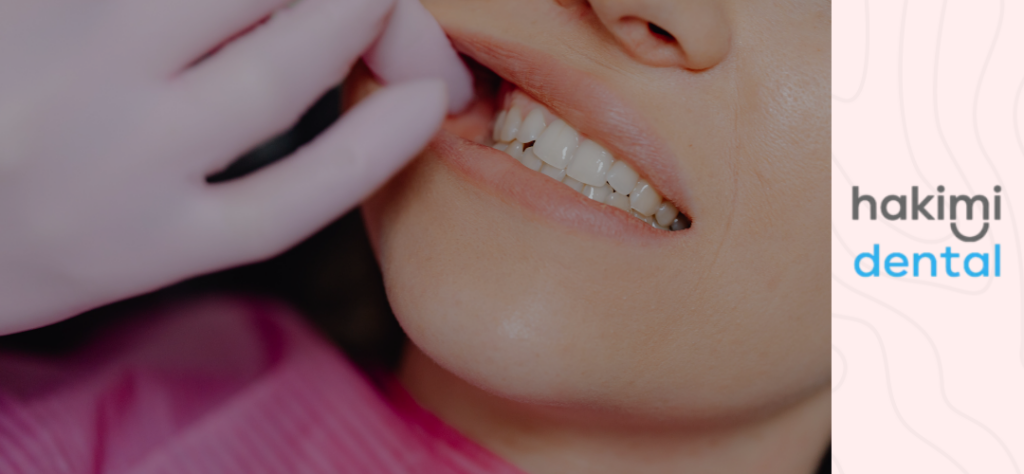
What is a dental numbing injection?
A dental numbing injection is a dose of local anaesthetic — a medication that temporarily blocks the nerve signals responsible for transmitting pain from a specific area of the mouth to the brain. Local anaesthetics work on the peripheral nerves in the mouth rather than on the brain itself, which is why they produce numbness in a specific region while leaving you fully conscious and aware.
The active ingredient in most dental local anaesthetics used in the UK is articaine or lidocaine, though bupivacaine, prilocaine and mepivacaine are also used in certain clinical situations. These drugs belong to the amide class of local anaesthetics and work by blocking sodium channels in the nerve cell membrane — preventing the nerve from generating or transmitting an electrical impulse. No impulse means no pain signal reaches the brain.
Local anaesthetics are typically combined with a vasoconstrictor — usually adrenaline (epinephrine) — in a small concentration. The vasoconstrictor narrows the blood vessels in the injection area, slowing the absorption of the local anaesthetic into the bloodstream. This has two benefits: the anaesthetic stays active in the area for longer, and the dose of anaesthetic needed is reduced because it is not being diluted and removed by blood flow as quickly.
Types of dental numbing injections — and what they feel like
Not every injection is the same. The technique used depends on which tooth needs treatment, the type of procedure, and the anatomy of that specific area of the jaw.
Injection type | Where it’s used | What it numbs | Typical duration |
Infiltration | Upper teeth, lower front teeth | Specific tooth and surrounding gum | 45–90 minutes |
Inferior alveolar nerve block | Lower back teeth (molars, premolars) | Lower jaw, teeth, lip and chin on one side | 2–4 hours |
Palatal injection | Roof of the mouth for upper teeth | Palatal gum tissue | 45–90 minutes |
Periodontal ligament injection | Individual tooth — often supplemental | Single tooth only | 20–45 minutes |
Buccal nerve block | Lower back teeth (supplemental) | Cheek-side gum tissue | 1–2 hours |
Intraosseous injection | Difficult-to-numb individual teeth | Single tooth | 20–45 minutes |
Infiltration injections are the simplest and most comfortable. The solution is deposited close to the root tip of the target tooth, diffusing through the relatively thin bone of the upper jaw or lower front tooth region to reach and block the local nerve.
Inferior alveolar nerve blocks (IANBs) — used routinely for lower molar and premolar work — numb an entire half of the lower jaw by anaesthetising the inferior alveolar nerve as it enters the jaw canal at the back of the mouth. These produce the most dramatic numbness: not just the teeth and gum, but the lower lip, chin and tongue on that side. The injection is placed further back in the mouth, near the ramus of the mandible, which can feel more unfamiliar than other injections.
Palatal injections are the ones patients most often find uncomfortable — the palatal mucosa (roof of the mouth) has very little space between the surface and the underlying bone, making the injection less comfortable than in looser soft tissue. Good technique and a slow injection rate make a significant difference here.
What you actually feel during a dental numbing injection
This is the part most patients want to know about, so it is worth being specific.
Before the injection — topical anaesthetic
In most practices, before any injection is given, a topical anaesthetic gel is applied to the gum at the injection site. This is typically benzocaine or lidocaine in a gel or spray form. It numbs the surface of the gum tissue so that the needle’s initial contact is less detectable. It takes around 60 seconds to work and makes a meaningful difference to first-needle sensation.
The needle going in
If topical anaesthetic has been applied and the needle is inserted slowly and steadily, most patients describe the initial insertion as feeling like mild pressure — often less than they expected. The needle itself is very fine (typically 27 or 30 gauge for dental use), and the surface is already numb from the topical gel.
The solution being injected
This is where most patients feel the most notable sensation. As the local anaesthetic solution enters the tissue, it creates a pressure — described variously as a sting, a pressure, a spreading sensation or a slight burning. The intensity depends largely on the speed of injection: a slow, controlled injection over 30 to 60 seconds produces significantly less discomfort than a fast one. The temperature of the solution also matters — warming the cartridge to body temperature before injection reduces the sting noticeably.
The spreading numbness
Within 30 seconds to two minutes of the injection, numbness begins to set in. It typically starts as a tingling sensation — many patients describe it as similar to the early feeling of a limb falling asleep — before the area becomes fully numb. For an IANB, this spreads to the lip and chin, which can feel strange and unfamiliar even if it is not painful.
Why does the injection sometimes still hurt?
Even with excellent technique, some injections are more comfortable than others — and some patients find them consistently more difficult regardless of technique. Understanding why is genuinely useful.
Anxiety and tension: Stress raises the pain threshold in some patients but dramatically lowers it in others. The anticipation of pain causes muscle tensing, increased heart rate and heightened sensory awareness — all of which make the injection feel more uncomfortable. A patient who is genuinely relaxed before an injection will almost invariably find it more comfortable than one who is braced for it. This is not about being tough — it is physiology.
Infected tissue: When a tooth is acutely infected, the surrounding tissue is more acidic than normal. Local anaesthetics work best in a neutral pH environment — the acidic environment of an abscess or acute infection reduces the drug’s ability to penetrate nerve membranes. This is the clinical reason why numbing an infected tooth is sometimes harder, and why dentists occasionally need to use more anaesthetic or a different technique for acutely infected teeth.
Anatomical variation: Some patients have accessory innervation — additional nerve pathways supplying the same tooth that are not covered by the standard injection. The lower first molar, in particular, is sometimes supplied by accessory branches of the mylohyoid nerve that the IANB does not reliably reach. This is managed with supplemental injections — a periodontal ligament injection or an intraosseous technique.
Injection rate: This is perhaps the most controllable factor. A fast injection is significantly more uncomfortable than a slow one. The solution injected quickly distends the tissue rapidly, causing more intense pressure. Slow, steady injection — ideally using a computer-controlled delivery device or a standard syringe delivered with deliberate care — is much more comfortable.
How long does the numbing last?
Duration varies based on which drug and concentration is used, whether a vasoconstrictor is included, the technique, and individual metabolism.
Most standard lidocaine with adrenaline injections provide effective working anaesthesia for 45 to 90 minutes for infiltrations and 2 to 4 hours for inferior alveolar nerve blocks. The soft tissue numbness — lip, chin, tongue — typically persists longer than the tooth numbness.
Articaine with adrenaline, used widely in UK dental practice, has a similar profile to lidocaine but with slightly better diffusion through bone — making it particularly useful for lower teeth where infiltration is needed rather than a full nerve block.
For procedures requiring longer anaesthesia — or for patients who metabolise local anaesthetic quickly — bupivacaine can provide substantially longer duration, sometimes five to eight hours.
What happens when the numbness wears off?
As the anaesthetic is absorbed into the bloodstream and metabolised by the liver, sensation gradually returns. Most patients describe this as a tingling that spreads back through the numb area — the reverse of how numbness spread in.
A few things to be aware of during this phase:
- Do not eat on the numb side until sensation is fully restored. The lack of feeling means you cannot judge where your cheek, tongue and lip are relative to your teeth — accidental biting is common and can cause surprisingly significant soft tissue injury that only becomes apparent later.
- Avoid hot drinks until sensation returns — you cannot reliably detect temperature.
- Check your bite once sensation is back. If the tooth that was treated feels like it hits before the other teeth, the filling or restoration may need a minor adjustment — call the practice.
Managing dental injection anxiety
For many patients, it is not the dental treatment itself that produces anxiety — it is specifically the dental numbing injection. This is worth acknowledging directly because it is extremely common and does not make someone unusual or difficult.
Cognitive strategies — knowing what to expect (which this article is partly intended to support), focusing on breathing, and understanding that the sensation of the injection is brief and predictable — make a real difference for many patients.
Communication with the dentist is important. Letting the dentist know that you are anxious about the injection is not a problem — it is useful information. It allows them to slow down, talk through what they are doing, use topical anaesthetic thoroughly, and inject more slowly. A patient who says nothing and braces silently is harder to help.
The WAND (computer-controlled delivery system): Some practices use a computer-controlled local anaesthetic delivery system that regulates the injection rate automatically, ensuring a consistent, slow delivery that is markedly more comfortable than a standard syringe — particularly for palatal injections.
For patients whose anxiety about dental treatment — including the numbing injection — is severe enough to have led to avoided or postponed appointments, there are broader options worth discussing. At Hakimi Dental Clinic, we take anxiety about injections and dental treatment seriously and will always take the time to talk through your concerns before any treatment begins.
Dental numbing injection and specific treatments
Understanding how the numbing injection relates to common dental procedures helps set expectations for different types of appointments.
- Fillings: The most common use of a dental numbing injection. A filling in a back tooth typically requires a full nerve block; a filling in an upper tooth usually just needs a straightforward infiltration. Once numb, no pain should be felt during the drilling or placement.
- Tooth extractions: An extraction requires thorough anaesthesia — both the tooth nerve and the surrounding gum tissue on all sides must be numb. This sometimes means multiple injections from different angles. Once effective, an extraction involves significant pressure and movement but no pain.
- Root canal treatment: Root canal treatment is carried out entirely under local anaesthesia. The reputation of root canal treatment as painful largely dates from an era before modern anaesthetic techniques. With current techniques, the procedure should be no more uncomfortable than any other filling.
- Dental implants: Implant placement requires anaesthesia of both the bone and overlying gum tissue. The injection protocol is similar to extractions. Bone itself does not have pain receptors — the anaesthetic targets the nerve pathways leading to it rather than the bone directly.
- Gum treatment (root surface debridement): Where deep cleaning below the gum line is needed for gum disease treatment, local anaesthesia is often used to make the procedure comfortable. Patients attending for a dental hygienist appointment involving deep subgingival work may receive a numbing injection as part of that appointment.
- Emergency dental appointments: Many emergency situations — acute pain, abscess, trauma — require a numbing injection as the first step before assessment or treatment can proceed comfortably. At Hakimi Dental Clinic, emergency appointments start from just £25, and pain relief is the immediate priority.
Is a dental numbing injection safe?
For the vast majority of patients, yes — local anaesthetic with adrenaline is among the safest medications used in clinical medicine. The doses used in dentistry are small, the route of administration is localised, and systemic absorption is slow and manageable.
Allergy: True allergy to amide local anaesthetics (lidocaine, articaine) is rare — far rarer than patients often believe. Many patients who report an “allergy” actually experienced a vasovagal response (fainting from anxiety) or the effects of the adrenaline in the solution (a rapid heartbeat and feeling of anxiety or jitteriness). Genuine allergy can be assessed by an allergist if needed.
Adrenaline and heart conditions: Patients with significant heart conditions, severe hypertension or thyroid disease should inform their dentist before a dental numbing injection. In most cases, a low-adrenaline or adrenaline-free formulation can be used. The amounts of adrenaline in dental cartridges are very small — but discussing any relevant medical history ensures the most appropriate formulation is chosen.
Pregnancy: Local anaesthetics, including those with low-concentration adrenaline, are considered safe for use in pregnancy. Routine dental check-ups and necessary treatment should not be avoided during pregnancy.
Children: Local anaesthetic doses are calculated by weight in children. Dental treatment for children can and does include numbing injections where appropriate — though the technique is adapted for age and the emotional preparation is particularly important.
The bottom line
A dental numbing injection is one of the most reliably effective tools in clinical dentistry. When administered well — with topical anaesthetic applied first, a fine needle, a slow and controlled injection rate and appropriate technique for the tooth being treated — it transforms a potentially uncomfortable procedure into one where the patient feels pressure but not pain.
The anxiety most patients feel about the injection itself is entirely understandable and completely normal. It is also almost always disproportionate to the actual experience — particularly with a dentist who prioritises technique and takes the time to make the process as comfortable as possible.
At Hakimi Dental Clinic in Oldbury, Birmingham, we offer dental check-ups from just £35 and emergency appointments from £25. Whether you need a routine appointment or urgent treatment, our team takes every concern — including concerns about injections — seriously.
Disclaimer
The information in this article is intended for general educational guidance only and does not constitute personalised dental or medical advice. For concerns about a dental numbing injection or your suitability for local anaesthesia, please discuss this with a qualified dental professional before treatment.
Hakimi Dental Clinic is a dental practice at 51a New Birmingham Road, Oldbury, B69 2JF. We offer dental check-ups from £35, emergency dental appointments from £25, dental hygiene appointments, dental implants, Invisalign, composite bonding, porcelain veneers, teeth whitening, dental crowns and smile makeovers.
FAQs
The initial needle insertion is usually felt as mild pressure, particularly if topical anaesthetic gel has been applied first. The injection of the solution produces a brief stinging or pressure sensation — the intensity of which depends largely on how quickly the solution is injected. A slow, deliberate injection by a careful clinician is significantly more comfortable than a fast one. Most patients find the experience considerably less unpleasant than they anticipated before their first injection.
It depends on the type of injection and the anaesthetic used. Infiltration injections for upper teeth typically provide 45 to 90 minutes of effective numbness. Inferior alveolar nerve blocks for lower back teeth last two to four hours, with soft tissue numbness (lip, chin) often persisting at the longer end of that range. If you are concerned about driving or other activities, plan for numbness to persist for up to four hours after a lower back tooth procedure. For emergency dental appointments, the team will advise on expected duration before you leave the practice.
It does happen — most commonly with acutely infected teeth or due to accessory nerve anatomy. If you can still feel sharp pain once treatment has begun, tell your dentist immediately. Supplemental injections — a periodontal ligament injection, an intraosseous injection, or additional infiltration — can be given to complete the anaesthesia. No reputable dentist will proceed with treatment if you are in pain. A failed initial injection is not unusual in certain circumstances and is managed with additional anaesthetic, not by continuing regardless.
Local anaesthetic itself does not interact with anticoagulant or antiplatelet medications in a clinically significant way for routine dental procedures. The adrenaline in the solution is present in very small quantities and is not typically a concern. However, your dentist should always be informed of all medications you are taking — including blood thinners — before any treatment, so they can adapt the technique and plan the procedure appropriately. Mention this at your dental check-up so it is on your records.
This is a common and alarming experience for some patients — but it is almost always caused by the small amount of adrenaline in the local anaesthetic solution being absorbed into the bloodstream, rather than by anything more serious. Adrenaline causes a temporary increase in heart rate and a feeling of jitteriness or anxiety. It resolves within a minute or two. In patients for whom this is particularly distressing, or who have a history of cardiac conditions, an adrenaline-free formulation can be used — discuss this with the clinical team at Hakimi Dental Clinic before your appointment. In rare cases, light-headedness and heart racing during a dental injection can also be a vasovagal response (the body’s reaction to anxiety), which is also self-limiting but may require you to lie back for a moment.