
Can a Dentist Tell If You Smoke? Yes, and Here Is Exactly What They Are Looking At
It is a question that a surprising number of patients either search online or think about on the way to a dental appointment. Whether you are an occasional smoker, someone who smokes socially but does not want to mention it, or someone who quit a while ago and wonders if the signs are still there — can a dentist tell if you smoke?
The honest answer is yes, in most cases. Not because dentists are making judgements or trying to catch people out — they are not — but because smoking leaves specific, clinically identifiable marks on the teeth, gums, tongue and soft tissue of the mouth that a trained clinician can recognise during a routine examination.
This article explains exactly what those signs are, why they matter clinically, what the oral health effects of smoking actually look like in practice, and why being honest with your dentist about smoking is genuinely in your best interest — not because of any judgement, but because it changes how they look after your health.
At Hakimi Dental Clinic in Oldbury, Birmingham, we carry out thorough dental check-ups from just £35 — and part of every check-up is a full examination of the teeth, gums and soft tissues. Smoking significantly affects all three.
Can a Dentist Tell If You Smoke? The Clinical Evidence
The simple answer is that a thorough dental examination provides multiple simultaneous signals, and experienced clinicians can recognise the pattern of changes associated with smoking even before a patient says anything.
Here is what a dentist actually looks at — and what smoking does to each area.
1. Tooth Staining: The Most Obvious Sign
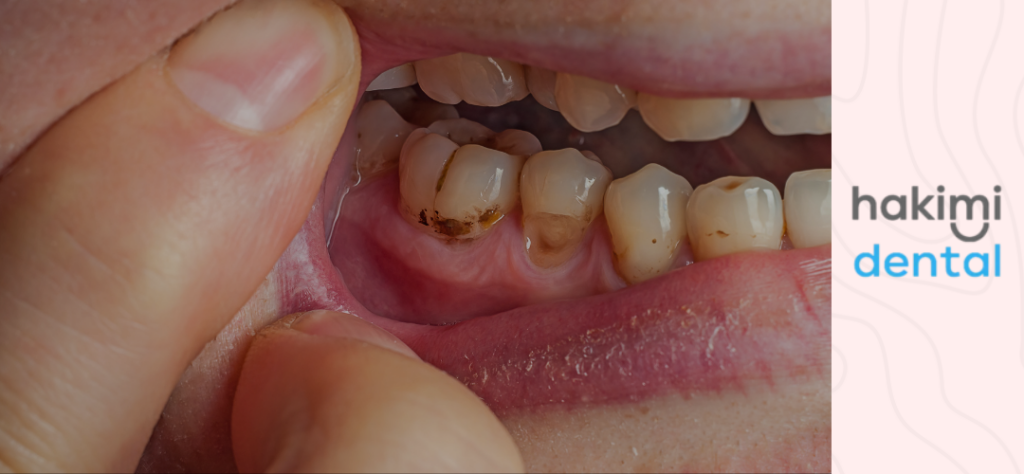
The most immediately visible sign of smoking is tooth discolouration. Cigarette smoke contains tar — a sticky, dark substance — along with nicotine and a range of other compounds that adhere to the tooth surface and are absorbed into the enamel and dentine over time.
What it looks like: Tobacco staining tends to be yellow, brown or dark brown. It is often heavier on the back surfaces of the teeth — the surfaces closest to where smoke passes through — and in the margins where the teeth meet the gumline, where the porous cementum of the root surface or exposed dentine absorbs staining most readily.
Unlike dietary staining from coffee, tea or red wine, tobacco staining tends to be more tenacious and penetrates more deeply into the tooth structure. Surface staining that builds up over years becomes progressively harder to remove with brushing alone and requires professional polishing to address.
Can a dentist tell by staining alone? Not with certainty — coffee and tea produce yellow-brown staining too. But the distribution, depth and character of tobacco staining has a specific pattern that an experienced clinician recognises. Combined with the other signs, staining contributes significantly to the overall clinical picture.
2. Gum Appearance: A Less Obvious But More Clinically Significant Signal
The gum tissue of a smoker looks different from the gum tissue of a non-smoker — and this is one of the most clinically important differences a dentist observes.
Gum colour: Healthy gum tissue is pale pink and firm. In smokers, the gums often appear paler or darker, with a more fibrotic (tougher, leathery) texture. Long-term smokers can develop a condition called melanosis — a brownish pigmentation of the gum tissue caused by increased melanin production stimulated by tobacco compounds.
Reduced bleeding: This is counter-intuitive but clinically important. Smoking causes vasoconstriction — it narrows the blood vessels in the gum tissue. This reduces blood flow to the gums, which actually masks one of the primary clinical signs of gum disease: bleeding on probing.
In non-smokers, gum disease shows up clearly because inflamed gums bleed when touched with a dental probe. In smokers, the reduced blood flow suppresses this bleeding response — giving the false impression of healthier gums even when significant gum disease is present. This is one of the reasons smoking is so damaging from a dental perspective: it hides its own destruction.
An experienced dentist knows to probe gum pockets more carefully in suspected smokers because the bleeding response cannot be relied upon. The absence of bleeding does not mean absence of disease in someone who smokes.
Gum recession and bone loss: Smoking is one of the strongest risk factors for periodontal disease. Gum recession and bone loss that is more advanced than expected for a patient’s age — particularly where it does not correlate with obvious plaque levels — is a recognised pattern in smokers.
3. Gum Disease Severity: The Hidden Damage
Can a dentist tell if you smoke from your gum health? Often, yes — and this is one of the most clinically significant indicators.
Smoking affects gum health in multiple ways simultaneously:
- It reduces blood flow to the gum tissue, impairing the immune response and healing capacity
- It suppresses the function of neutrophils and macrophages — the immune cells that fight the bacteria causing gum disease
- It alters the composition of bacteria in the dental plaque, favouring the species most associated with aggressive periodontitis
- It reduces the mouth’s salivary flow, which normally helps neutralise bacterial acids and wash debris from tooth surfaces
The result is that smokers are significantly more likely to develop gum disease, experience more rapid bone loss when they do, and respond less well to periodontal treatment. Published research consistently shows that smokers are two to seven times more likely to develop severe gum disease than non-smokers.
At a dental check-up, gum pocket depths are measured around every tooth. Deep pockets with bone loss on X-rays — particularly without a proportionate level of visible plaque — raise the index of suspicion for smoking as a contributing factor.
4. Oral Soft Tissue Changes: The Most Clinically Serious Indicator
This is where the dentist’s role becomes most important — and where being honest about smoking status is most clinically critical.
Leukoplakia: White patches on the tongue, cheek, floor of the mouth or gum tissue that cannot be wiped off are a significant clinical finding. Tobacco use is the primary risk factor for leukoplakia — white patches of the oral mucosa that carry a risk of malignant transformation. Not all leukoplakia becomes cancerous, but the association with smoking means these patches require proper assessment, not simply monitoring at home.
Erythroplakia: Red patches on the oral mucosa. Less common than leukoplakia but carrying a higher risk of malignant change.
Palatal changes: Smokers — particularly pipe smokers — can develop a condition called nicotine stomatitis, characterised by white, thickened tissue on the palate with red dots representing inflamed salivary gland openings. This is a highly specific sign strongly associated with smoking.
Oral cancer risk: Tobacco use is one of the two strongest risk factors for oral cancer (the other being alcohol, particularly in combination). The lifetime risk of oral cancer in people who smoke and drink heavily is substantially higher than in non-smokers. A soft tissue examination — looking systematically at the tongue, cheeks, floor of the mouth, palate and throat — is a standard part of every thorough dental check-up at Hakimi Dental Clinic, and it is more clinically relevant for patients who smoke.
Early oral cancer is predominantly painless. The lesion that becomes significant does not announce itself with severe symptoms — it is often a persistent ulcer, a white or red patch, or a lump that a patient has been ignoring for months. The three-week rule applies: any oral soft tissue change that has been present for more than three weeks without resolving needs clinical assessment.
5. Smell: The Most Direct Indicator
No dentist will pretend this is not a factor. Cigarette smoke has a characteristic smell that is absorbed into the clothing, breath and oral cavity, and it is detectable during a dental examination — particularly if the patient has smoked recently.
However, this alone is not clinically relied upon. Non-smokers exposed to secondhand smoke can retain the smell. The dentist’s focus is on the clinical signs rather than smell alone.
6. Delayed Healing: A Post-Treatment Signal
If you have had a tooth extraction and the healing is slower than expected, or if you develop a dry socket (alveolar osteitis) — a painful complication where the blood clot in the extraction site fails to form or is dislodged — smoking is one of the primary causative factors.
Smoking impairs healing through vasoconstriction, reducing the blood supply to healing tissue, and through the negative pressure of inhaling, which can physically dislodge the protective blood clot. The association between smoking and dry socket is well established enough that dentists will specifically ask about smoking after extractions, and will advise patients to stop smoking in the immediate post-extraction period.
A patient who presents with delayed healing, repeated dry socket complications, or persistent problems with extraction sites that are not explained by other factors raises the clinical suspicion of smoking regardless of what the patient has disclosed.
Does It Matter if You Tell Your Dentist You Smoke?
Yes — and this is the core message of this article.
A dentist who knows you smoke can:
- Monitor your gum health more carefully, knowing that the absence of bleeding does not indicate absence of disease
- Perform more thorough soft tissue screening, specifically looking for leukoplakia, erythroplakia or other changes associated with tobacco use
- Advise you on smoking cessation resources, which are associated with significant and measurable improvements in gum health after as little as three months of quitting
- Monitor any soft tissue changes over time with appropriate follow-up rather than making assumptions about the cause
- Adjust treatment recommendations — for example, advising that implant success rates are significantly lower in active smokers, and discussing whether quitting first would improve the prognosis
There is no judgement in a dental consultation about smoking. Every dentist has seen the full range of patients across the full spectrum of lifestyle choices, and the clinical team’s role is to provide the best possible care based on the full clinical picture — not to lecture or make patients uncomfortable.
What matters clinically is that your dentist has accurate information. Withholding smoking history means the dentist is working with an incomplete picture of your risk profile, which is ultimately to your disadvantage.
Vaping: Can a Dentist Tell If You Vape?
This is an increasingly common question as vaping has become more prevalent.
Vaping is associated with fewer oral health effects than cigarette smoking in some respects — there is no tar, and therefore less surface staining from vaping compared to cigarettes. However, it is not neutral:
- Vaping products contain nicotine (in most cases), which causes vasoconstriction and the associated suppression of gum bleeding and immune response
- The aerosol from vaping irritates the oral mucosa, and there are early case reports of soft tissue changes associated with long-term vaping
- Dry mouth is associated with vaping
- The long-term evidence on vaping-related oral health effects is still accumulating, and the precautionary principle applies
Whether a dentist can immediately identify a vaper from clinical signs alone is less straightforward than for cigarette smokers. The absence of obvious staining does not mean the absence of oral health effects from nicotine and the vaping aerosol.
What Can a Dental Hygienist Do for Smokers?
Regular dental hygienist appointments are particularly important for patients who smoke, for several reasons:
- Stain removal: Professional cleaning removes tobacco staining from the tooth surfaces that brushing cannot address. The air polish and ultrasonic cleaning available at hygiene appointments produce a noticeably cleaner result that toothbrushing alone cannot achieve.
- Tartar removal: Smoking is associated with increased tartar build-up in some patients, particularly on the lower front teeth. Tartar provides the habitat for the bacteria that cause gum disease — removing it at every hygiene appointment reduces the bacterial load and the progression of gum disease.
- Gum assessment: Because smoking suppresses the bleeding response, a hygienist who knows you smoke will probe pockets more carefully, measure them precisely and identify the early signs of periodontal disease that might otherwise be missed in a routine brief examination. This detailed gum assessment is a core component of a hygiene appointment at Hakimi Dental Clinic.
- Soft tissue monitoring: The hygienist can document the appearance of the soft tissues — the gums, tongue, cheeks and palate — and flag any changes at subsequent appointments. For a smoker, this ongoing monitoring is one of the most important elements of the overall care package.
- Smoking cessation support: The hygiene appointment is an appropriate and supportive context to discuss smoking cessation — not in a preachy way, but as a practical clinical conversation about the specific benefits that quitting would produce for the patient’s gum health, healing capacity and cancer risk.
Emergency Dental Care for Smokers
Smokers are at higher risk of dental infections and abscesses — partly because the immune suppression associated with smoking allows bacteria to gain a foothold more easily, and partly because gum disease progression is faster. If you are a smoker and develop acute dental pain, visible facial swelling, a bad taste in the mouth or difficulty opening your jaw, this needs same-day attention.
At Hakimi Dental Clinic in Oldbury, emergency dental appointments are available from just £25 — one of the most accessible emergency dental fees in the Birmingham area. If you need urgent assessment, we are here.
The Bottom Line
Can a dentist tell if you smoke? Yes — through staining, gum appearance, soft tissue changes, gum disease severity and delayed healing patterns. The clinical picture is recognisable to an experienced dentist even without disclosure.
More importantly: telling your dentist you smoke means they can provide significantly better care. The gum monitoring, soft tissue assessment, and treatment planning that a dentist carries out for a known smoker is more thorough and more clinically appropriate than what is done without that information.
At Hakimi Dental Clinic on New Birmingham Road in Oldbury, dental check-ups start from just £35 — a thorough, honest examination that includes gum assessment, soft tissue screening and the kind of professional, non-judgmental clinical advice that actually makes a difference.
Disclaimer
The information in this article is intended for general educational guidance only and does not constitute personalised dental or medical advice. If you are concerned about your oral health, please book an appointment with a qualified dental professional for a proper clinical assessment.
Hakimi Dental Clinic is a dental practice at 51a New Birmingham Road, Oldbury, B69 2JF. We offer dental check-ups from £35, dental hygiene appointments, emergency dental appointments from £25, dental implants, Invisalign, composite bonding, porcelain veneers, teeth whitening, dental crowns and smile makeovers.
FAQs
Experienced dentists can often identify smokers from the clinical picture — tooth staining, gum appearance, the pattern of gum disease and soft tissue changes all contribute. Tobacco staining has a characteristic pattern that is recognisable even if it is not definitive on its own. Combined with other signs, staining is a significant indicator. A dentist is not confirming smoking from staining alone — they are building a clinical picture across multiple signs. The most reliable approach is always to be honest with your dentist about your smoking history, as it improves the quality of care you receive. A dental check-up is conducted without judgement.
Yes, because the most clinically significant signs of smoking are not primarily visible in the teeth. Gum vasoconstriction — which suppresses bleeding and masks gum disease — gum pocket depth measurements, soft tissue changes like leukoplakia or palatal changes, and the pattern of bone loss on X-rays all provide information about smoking status independently of how the teeth look. A patient who whitens their teeth and maintains good tooth hygiene can have significant smoking-related gum disease and soft tissue changes that a thorough examination identifies. This is why dental check-ups involve much more than looking at the teeth.
Yes — significantly and measurably. Research shows that within three months of quitting, gum health begins to improve and the suppression of bleeding that smoking causes starts to reverse. After six to twelve months, the healing response improves considerably, the immune function in the gum tissue recovers, and the risk trajectory for gum disease and soft tissue changes decreases. The risk does not immediately equalise with non-smokers, but the improvement is real and clinically meaningful. A dental hygienist appointment is a good opportunity to discuss cessation support and monitor the improvements in gum health after quitting.
Not exactly the same, but vaping is not neutral for oral health either. The nicotine in most vaping products causes vasoconstriction similar to cigarettes — suppressing the gum bleeding response and potentially contributing to gum disease progression. Vaping aerosol irritates the oral mucosa, and dry mouth is a common side effect. The long-term evidence is still developing, but the precautionary position is that vaping has real oral health effects that should be disclosed to your dentist and factored into the care plan. Mention it at your dental check-up.
Absolutely — and in fact, smokers benefit more from regular dental care than non-smokers precisely because the oral health risks are higher. Regular dental hygienist appointments remove the tartar and bacterial deposits that drive gum disease progression, monitor pocket depths to identify deterioration early, and provide the soft tissue monitoring that is essential for smokers given the elevated oral cancer risk. The question is never whether regular dental care is worthwhile — it always is. If dental pain arises urgently, our emergency dental service at Hakimi Dental Clinic is available from just £25.