
Teeth from sucking fingers: what happens to the bite, why timing matters, and what can be done
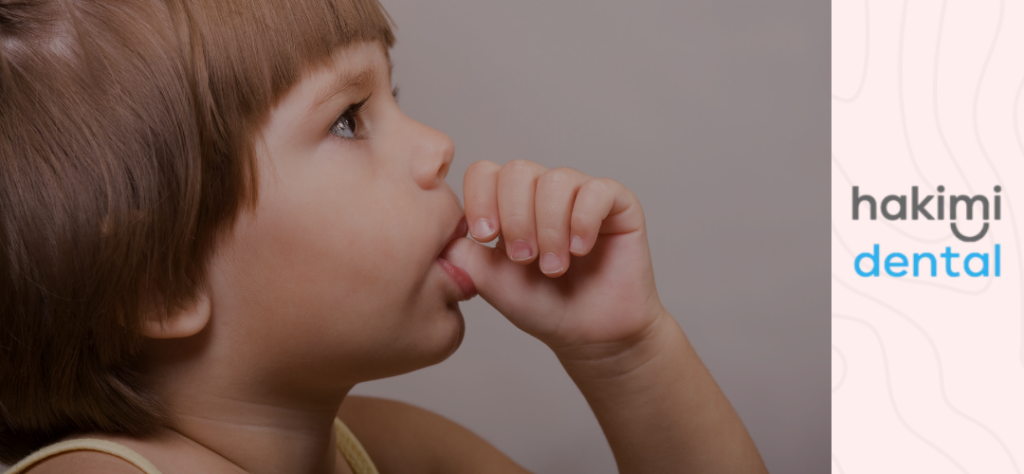
Thumb or finger sucking is one of the most natural childhood behaviours there is. It is soothing, self-regulating, and developmentally normal in infants and young children. The vast majority of children who suck their fingers in early childhood come through it with no lasting dental effects at all.
The issue is when the habit continues beyond the point where it can be dismissed as developmental. Because the effects of sustained digit sucking on the teeth and jaws are well established, consistent, and in some cases significant enough to require orthodontic treatment to correct. Understanding what the teeth from sucking fingers look like clinically, at what age the concern becomes real, and what can be done about the effects once they have occurred, gives parents and patients the information they need to make the right decisions at the right time.
At Hakimi Dental Clinic in Oldbury, Birmingham, we see the full range of bite development at dental check-ups from £35 and offer orthodontic treatment including Invisalign for patients of appropriate age where correction is needed. Here is everything worth knowing.
Why finger sucking affects the teeth: the mechanical explanation
The mouth is not a rigid structure. The teeth, the dental arches and the palate are shaped progressively by the forces acting upon them during development. This is why orthodontic treatment works at all: controlled forces applied to the teeth produce bone remodelling and tooth movement over time.
The same principle applies in reverse to digit sucking. When a finger is placed in the mouth and sucked, it applies a sustained, repetitive force to the front teeth and palate. The direction and nature of this force is specific:
- The tongue drops downward to accommodate the finger, rather than resting against the palate as it normally does.
- The cheek muscles create inward pressure during sucking, squeezing the sides of the upper arch.
- The finger pushes outward and upward against the upper front teeth and palate.
- Negative pressure is created when suction occurs, affecting the palate shape.
These forces, applied for hours per day over months and years, produce predictable changes in the developing teeth and bone. The teeth go where the forces push them. The palate reshapes around what is repeatedly placed against it.
The specific dental effects of finger sucking
Open bite
The most characteristic and most clinically significant effect of prolonged digit sucking is an anterior open bite: a gap between the upper and lower front teeth when the back teeth are in contact. The finger occupying the space between the front teeth during sucking prevents them from coming together as they develop, leaving a gap where contact should be.
An open bite produced by digit sucking is typically oval-shaped, mirroring the shape of the finger, and most pronounced in the centre of the front teeth. Its severity correlates with the duration and intensity of the habit: a mild open bite from a habit stopped at four years may self-correct; a significant open bite from a habit continuing to age eight or nine in the permanent dentition may require substantial orthodontic treatment to address.
Overjet (upper front teeth pushed forward)
The forward pressure of the finger against the upper front teeth gradually pushes them outward, increasing the overjet (the horizontal distance between the upper and lower front teeth). Upper front teeth that protrude significantly are both aesthetically noticeable and clinically vulnerable: they are more exposed to trauma and fracture in childhood falls and sports injuries.
Narrow upper arch
The inward pressure of the cheeks during sucking, combined with the downward displacement of the tongue that normally rests against the palate and supports arch width, allows the upper arch to narrow. A narrowed upper arch can produce posterior crossbites: situations where the upper back teeth sit inside rather than outside the lower back teeth when biting, which is the reverse of the normal relationship.
Palate shape
Sustained sucking of the finger creates negative pressure that draws the palate upward, producing a high, narrow palate shape in significant cases. The palate becomes vaulted (arched) rather than flat, which has consequences for both the space available for the permanent teeth and, in some patients, for nasal airway function.
Speech effects
An open bite where the upper and lower front teeth cannot come together directly affects certain speech sounds. The tongue tip, which in normal speech makes contact with the back of the upper front teeth for sounds like “t,” “d,” “n” and “l,” and which sits between the teeth for sounds like “th,” cannot function normally with a significant open bite. Lisping is a common consequence, specifically for the “s” and “z” sounds where the tongue is supposed to guide air along the midline but instead pokes through the gap.
When finger sucking becomes a clinical concern
This is the question parents most often ask, and it deserves a clear answer.
Before the age of three to four: Digit sucking in infants and toddlers is entirely developmentally normal. Most children stop the habit spontaneously between two and four years of age as they develop other coping mechanisms. The changes to the primary (baby) teeth that occur during this period are almost always temporary: once the habit stops, the primary teeth frequently self-correct, and the permanent teeth that erupt subsequently are not affected if the habit has stopped before they emerge.
Between four and six years: This is the transition period. Many children stop naturally during this window, and the primary teeth and developing permanent teeth have time to correct. If the habit is still significant after age four, it is worth raising at a routine dental check-up to assess what is happening with the bite and whether any guidance is needed.
After the permanent front teeth erupt (typically age six to seven): Once the permanent upper front teeth have erupted, continued digit sucking applies the same damaging forces to teeth that will need to serve for a lifetime. The changes that occur in the permanent dentition do not self-correct. At this point, the habit should be addressed as a clinical priority, and any bite changes that have already developed need monitoring and, in many cases, treatment.
From age ten onwards: The habit continuing into the later stages of childhood and adolescence has typically produced significant changes to the permanent dentition that will require orthodontic treatment to correct. The longer the habit continues, the more established the bite changes become and the more involved the correction.
How to help a child stop the habit
Habit cessation is the most effective intervention, particularly before the permanent teeth have erupted. The approaches that work best tend to share certain features: they are supportive rather than punitive, they involve the child in the process, and they use positive reinforcement.
Awareness and substitution. Many children suck their fingers without conscious awareness, particularly during sleep or when absorbed in something else. Helping a child notice the habit and offering an alternative sensory experience (a stress toy, something to hold) can reduce its frequency.
Positive reinforcement. Sticker charts, agreed rewards for habit-free days, and consistent praise for progress are more effective than shaming or negative responses. A child who feels embarrassed or criticised about the habit may become anxious, which increases sucking.
Barrier approaches. A plaster or bandage on the finger, or a specific glove worn at night, can serve as a physical reminder and break the habitual aspect of the behaviour without discomfort or punishment.
Dental habit-breaking appliances. For persistent habits in children old enough to cooperate, a fixed palatal appliance (sometimes called a habit crib or palatal rake) can be fitted by a dentist or orthodontist. The appliance does not hurt, but it makes digit sucking unrewarding by disrupting the suction. These appliances are generally highly effective and most children cease the habit within a few weeks.
Timing. Children who feel ready to stop and are motivated to do so succeed more quickly than those who feel pressured. The most effective conversations about stopping are those that acknowledge the habit without shame and involve the child in choosing when and how to address it.
What happens to the bite changes after the habit stops
The good news for parents of young children with digit sucking habits is that early cessation allows a significant degree of self-correction, particularly for the open bite.
In the primary dentition: Changes to baby teeth almost always correct spontaneously when the habit stops. The forces reshaping the primary teeth and developing bone are removed, and the normal developmental forces resume.
Early in the mixed dentition (age six to eight): Modest open bites and overjet at this stage have a reasonable chance of partial or complete self-correction if the habit stops, because the permanent teeth are still erupting and natural forces can guide them into better positions. Monitoring at dental check-ups at this stage establishes whether improvement is occurring or whether intervention is needed.
In the established permanent dentition: Changes that have occurred in the fully erupted permanent teeth do not self-correct after the habit stops. The bone has already remodelled around the displaced teeth, and orthodontic forces are needed to move them back to the correct positions.
Correcting the effects: treatment options
For patients, whether children or adults, who have teeth from sucking fingers that have produced a significant open bite, increased overjet or narrow arch, orthodontic treatment is the appropriate correction.
Palatal expanders
For children and adolescents with a narrow upper arch from digit sucking, a palatal expander applies lateral force to the upper arch, widening it gradually. This is most effective while the midpalatal suture is still open and responsive to gentle force, typically up to the mid-teenage years. Once the suture has fused in adulthood, surgical expansion is required for significant arch width correction.
Orthodontic treatment with clear aligners
For older adolescents and adults whose teeth from sucking fingers have produced an open bite or increased overjet in the permanent dentition, Invisalign provides a highly effective, aesthetically discreet method of orthodontic correction. The aligner system is designed to move the front teeth into the correct vertical and horizontal positions, closing open bites and reducing overjet through precisely planned digital treatment.
Invisalign is particularly appropriate for the open bite correction associated with digit sucking history, where the primary tooth movements needed are intrusion of the posterior teeth and extrusion or repositioning of the anterior teeth. The precision bite ramps and attachment system used in Invisalign are designed specifically to manage these movements.
For adults who were not aware the changes were correctable, or who were told at some point that their bite could not be fixed without surgery, Invisalign assessment is worth pursuing. Many bite changes from digit sucking that were previously considered surgically complex can now be managed with clear aligner treatment alone, or with a combination of aligners and restorative treatment.
Fixed braces
For more complex bite corrections, particularly where significant skeletal change has occurred alongside the dental change, fixed orthodontic appliances provide more control over the direction and amount of tooth movement than aligners, and may be the preferred option.
Restorative treatment post-orthodontics
Where years of digit sucking have caused wear on specific tooth surfaces, or where teeth were worn by abnormal contact in an open bite, restorative treatment following orthodontic correction rebuilds those surfaces. The general dentistry team at Hakimi Dental Clinic can assess what restorative work may be appropriate once the bite is in the correct position.
Why monitoring at regular check-ups matters
For children with a current or recent digit sucking habit, regular dental check-ups are the mechanism by which bite development is monitored and intervention is timed correctly.
A check-up at age seven or eight, when the permanent front teeth have erupted, gives a baseline assessment of whether the habit has produced any lasting bite change. A follow-up at age ten to eleven, as more permanent teeth erupt, establishes whether any changes are self-correcting or progressing. These check-ups inform when orthodontic referral is appropriate and whether early intervention would produce better outcomes than waiting.
For adults who were not aware the changes from finger sucking were treatable, or who are newly considering their bite options, a dental check-up with bite assessment at Hakimi Dental Clinic is the appropriate starting point. Emergency appointments from £25 are also available when dental concerns cannot wait.
The bottom line
Teeth from sucking fingers is a well-understood clinical phenomenon with a predictable pattern: open bite, increased overjet, narrow upper arch, and sometimes changes to palate shape and speech. The effects are developmental, produced by sustained mechanical forces during the period when the jaws and teeth are most responsive to the forces acting on them.
Stopped early, in the primary or early mixed dentition, the effects are usually temporary and self-correcting. Established in the permanent dentition, they require orthodontic treatment, for which Invisalign is an excellent and effective option for many patients.
At Hakimi Dental Clinic in Oldbury, Birmingham, we assess bite development, monitor the progress of any changes from digit sucking habits, and provide the Invisalign treatment that corrects the established effects in appropriate patients.
Disclaimer
The information in this article is intended for general educational guidance only and does not constitute personalised dental advice. For concerns about bite development or the dental effects of a finger-sucking habit, please book an appointment with a qualified dental professional.
Hakimi Dental Clinic is a dental practice at 51a New Birmingham Road, Oldbury, B69 2JF. We offer dental check-ups from £35, Invisalign orthodontic treatment, general dentistry, dental hygiene appointments, emergency dental appointments from £25, dental implants, composite bonding, porcelain veneers, teeth whitening, dental crowns and smile makeovers.
FAQs
The critical threshold is the eruption of the permanent front teeth, typically around age six to seven. Changes to the primary teeth caused by digit sucking are almost always temporary and self-correct when the habit stops. Changes that occur in the permanent dentition after this point do not self-correct. This is why the period from age five to seven is the most important window for addressing the habit: stopping it before or around the time the permanent front teeth emerge gives the best chance of avoiding permanent bite change. A dental check-up at age seven is an appropriate point to assess what is happening with the bite.
Yes, for many presentations of open bite caused by digit sucking, Invisalign is an effective treatment option. The aligner system uses precision bite ramps and planned tooth movements to manage the intrusion and extrusion needed to close an open bite and reduce overjet. A clinical assessment establishes whether the degree of bite change is within the correction range that Invisalign can achieve, or whether fixed appliances or surgical assistance would be needed for more significant cases.
It is worth raising at the next dental check-up so the dentist can assess the current bite and monitor the erupting permanent teeth. At six, the habit is not yet guaranteed to cause permanent change, but it is at the point where helping the child stop is clinically appropriate. If the permanent front teeth are already erupted and showing signs of displacement, earlier rather than later intervention is preferable. The majority of children stop the habit naturally around this age with gentle support.
In young children in the primary dentition, yes, often substantially. In children in the early mixed dentition (age six to eight) who have recently stopped the habit, modest open bites and overjet sometimes improve as the permanent teeth erupt and the normal forces of the lips and tongue guide them into position. In the fully established permanent dentition, bite changes from digit sucking do not correct on their own and require orthodontic treatment to address.
Clinically, the effects are similar: both produce an open bite, increased overjet and a narrowed upper arch through the same mechanical mechanisms. The shape of the open bite may differ slightly (thumb sucking often produces a more asymmetric open bite if the thumb is placed off-centre), and the intensity of the effects is influenced by how hard and how long the sucking occurs. The key clinical difference is practical: breaking a thumb sucking habit can be supported by barrier approaches and appliances more easily than a multi-finger habit, and the age at which the habit stops is the factor that most significantly determines the degree of dental effect.